Damping & Resonance
In 1940, a bridge across the Tacoma Narrows twisted itself apart in a moderate wind, filmed from start to catastrophic finish. It's the textbook example of resonance gone wrong — understanding why means understanding both what damping does to an oscillation, and what damping fails to do once a driving frequency gets too close to a system's natural frequency.
Damping
Damping is the effect of resistive forces (friction, air resistance, fluid drag) acting on an oscillating system, removing mechanical energy over time and causing amplitude to decrease. Every real oscillator experiences some degree of damping. Three broad categories are usually distinguished, by how the amplitude dies away:
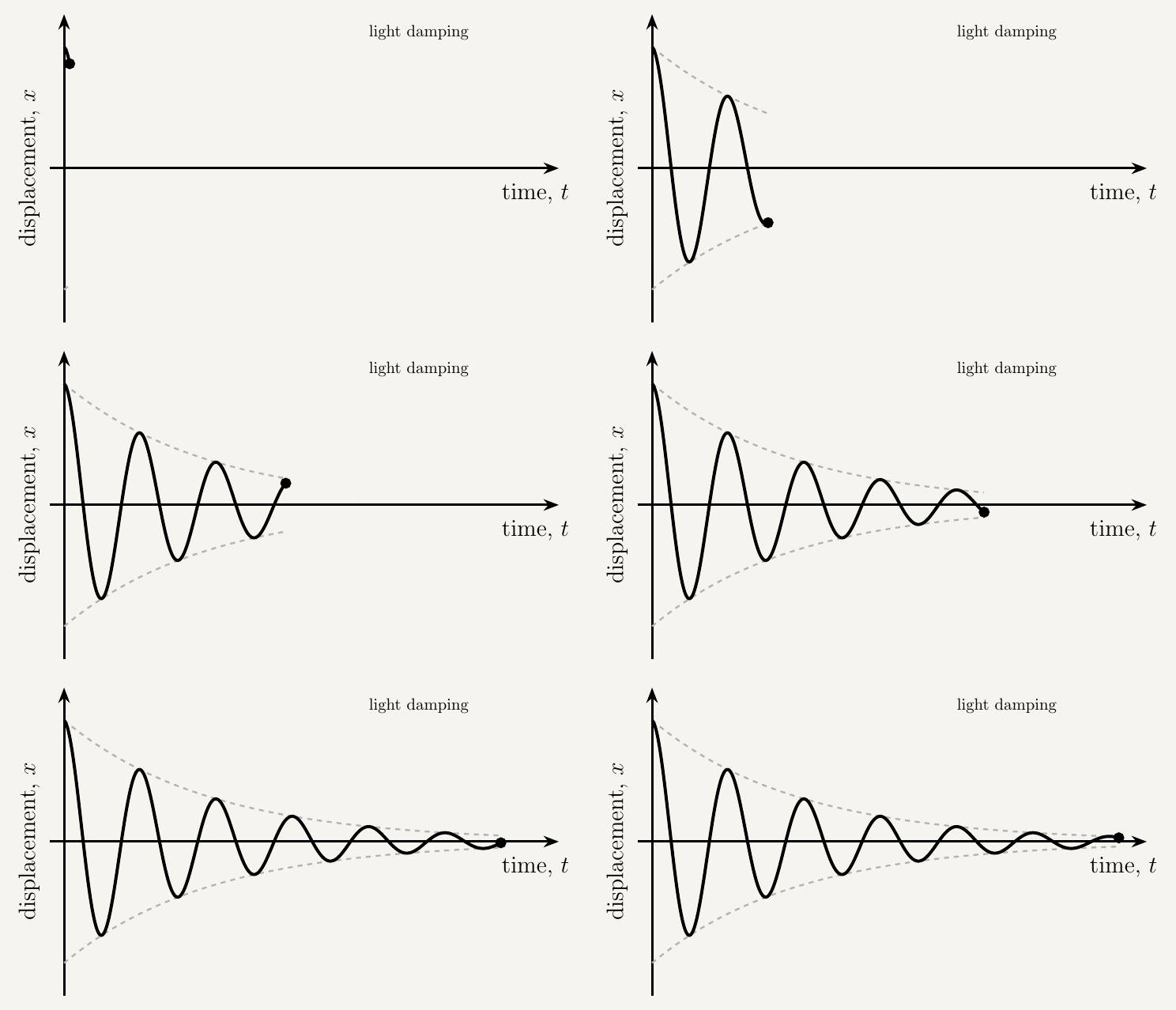
Light damping
The system oscillates with gradually, exponentially decreasing amplitude, completing many full cycles as it does — still clearly periodic motion, just slowly fading. A swinging pendulum in air, or a plucked guitar string, are both lightly damped: the period stays close to the undamped natural period, while the amplitude envelope shrinks smoothly cycle after cycle.
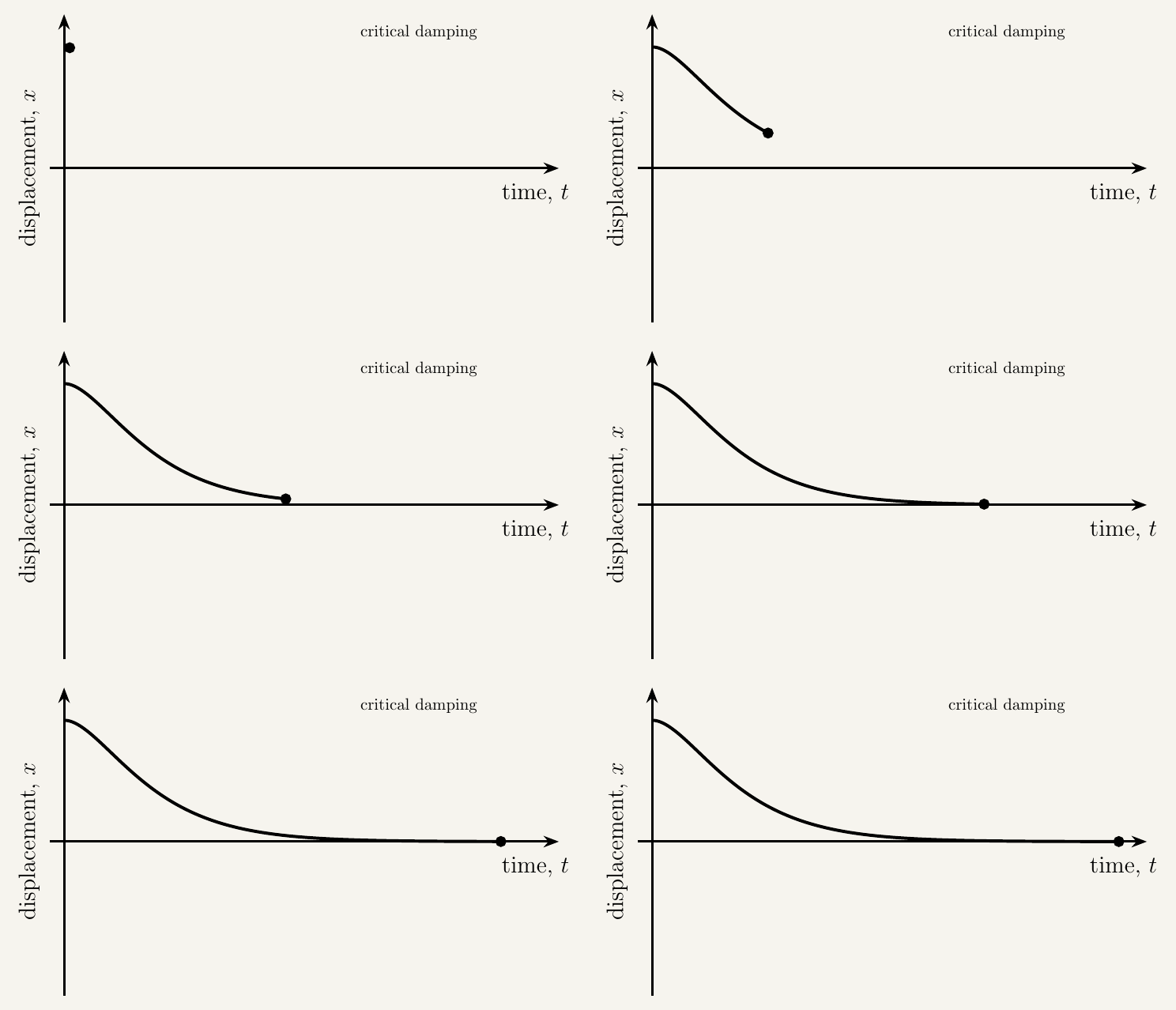
Critical damping
The system returns to equilibrium in the shortest possible time, without oscillating — displaced and released, it heads straight back to zero displacement as fast as physically possible, with no overshoot. This is deliberately engineered in many devices: a car's suspension is designed close to critical damping so it returns to a level ride quickly after a bump, without bouncing repeatedly.
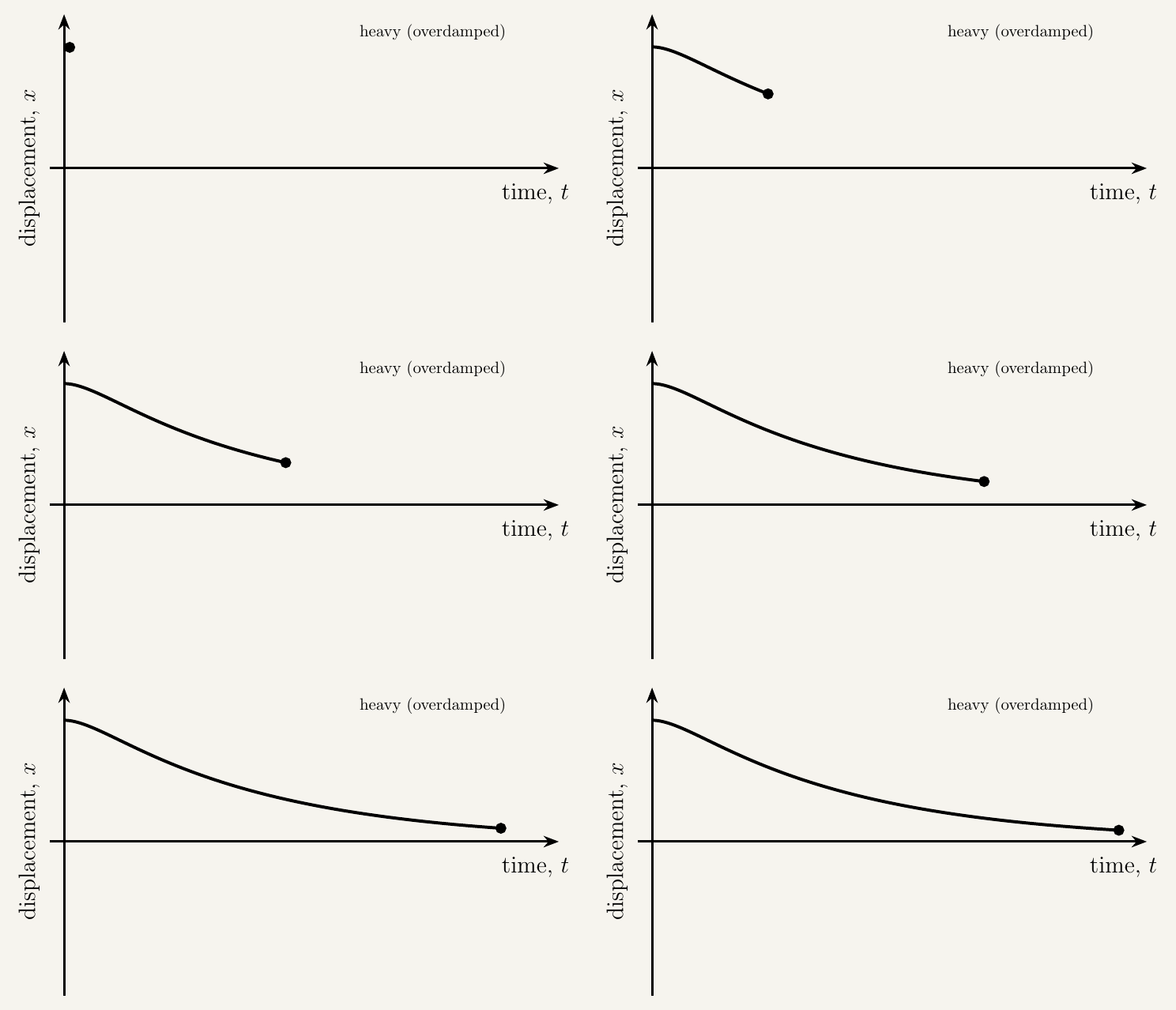
Heavy (overdamped) damping
The system also returns to equilibrium without oscillating, but more slowly than the critical case — resistive forces are so strong the system is sluggish even in its one-way return. A door fitted with a strong hydraulic closer that swings shut slowly and smoothly, never swinging past closed and back open, is heavily damped.
Resonance
Building on the previous lesson: resonance occurs when a system is forced to oscillate at a driving frequency at or very near its own natural frequency, producing a dramatic peak in amplitude. At resonance, energy transfers from driver to system with maximum efficiency, because each push arrives in phase with the system's own natural rhythm, reinforcing the motion every cycle rather than sometimes working against it.
How damping affects the resonance peak
Damping has two connected effects on the amplitude-against-driving-frequency curve for a forced oscillator:
- It reduces the height of the resonance peak. More damping means more energy dissipated per cycle, so amplitude can't build up as much even driven exactly at the natural frequency.
- It broadens the resonance peak. With little damping, only driving frequencies extremely close to $f_0$ produce a large response — narrow and sharp. With more damping, a wider range around $f_0$ produces a comparably large response — flatter and broader.
Taken to the extreme, sufficiently heavy damping can suppress the resonance peak almost entirely, leaving a response that barely varies with driving frequency — part of why heavily damped systems (like car suspension) don't exhibit troublesome resonant behaviour in everyday use.
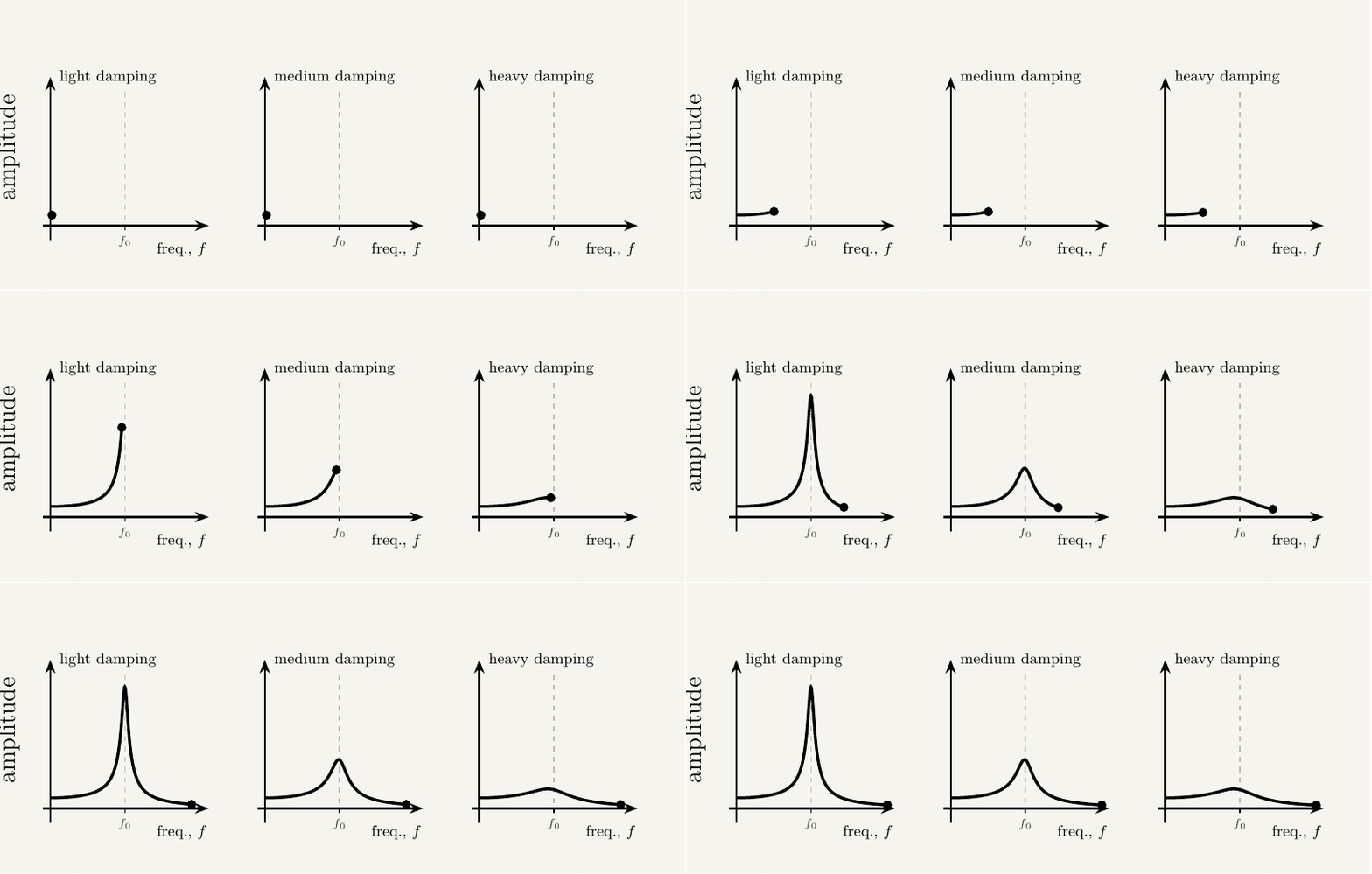
Strictly, the driving frequency producing maximum amplitude shifts very slightly below the true undamped natural frequency $f_0$ as damping increases — heavier damping doesn't just flatten and broaden the peak, it nudges its position leftward. For A-level purposes this shift is usually negligible, and questions typically expect the peak to be treated as occurring at (or extremely close to) $f_0$ regardless of damping — but recognising that this small shift exists can distinguish a strong answer from an adequate one.
Key takeaways
- Damping removes energy from an oscillating system via resistive forces, reducing its amplitude over time; light damping still oscillates with a decaying amplitude, while critical and heavy damping return to equilibrium without oscillating at all (critical damping does so fastest).
- Resonance occurs when the driving frequency matches (or nearly matches) the natural frequency, producing a large peak in amplitude due to maximally efficient energy transfer from driver to system.
- Increasing damping lowers and broadens the resonance peak on an amplitude-against-driving-frequency graph (and very slightly shifts its position to a lower frequency).
- Real-world consequences include the Tacoma Narrows Bridge collapse (destructive resonance from wind-driven oscillation) and earthquake risk to buildings whose natural sway frequency coincides with ground-shaking frequencies; engineered damping (tuned mass dampers, car suspension near critical damping) is used to suppress unwanted resonant amplification.